Red Brigades
Man on FireThe Red Brigades appear in the novel as a terrorist organization whose violence shapes everyday security concerns in Milan. Their presence is both direct and consequential: a killing attributed to the group unfolds before Rika, while the wider atmosphere of terrorism makes professional protection harder to obtain and helps turn kidnapping risk into a market for insurance and security services.
Terrorism and the security market
The Red Brigades are named alongside the Red Army and Basque Nationalists as examples of the terrorism then affecting Europe. In the discussion of bodyguard services, that climate has a concrete economic effect: specialized agencies operate across cities including Milan and Rome, but demand and the shortage of genuinely capable guards push prices upward. The Red Brigades therefore enter the plot not only as a source of violence but as part of the conditions that make a family’s search for protection costly and difficult.
The novel also sets out how that market intersects with kidnap insurance. Italian law bars domestic insurers from writing such policies, on the stated grounds that coverage might encourage kidnapping; foreign insurers can provide it, with Lloyd’s of London described as the leading provider. Premiums must be paid outside Italy, and policyholders must keep their coverage secret. Because security measures can lower premiums, a full-time bodyguard may serve an insurer’s calculations as well as a family’s safety. The novel’s example contrasts a thirty-million-lire annual guard with a cheaper, seven-million-lire premium bodyguard, whose principal value is qualifying the policy for a reduced rate rather than reliably stopping an abduction.
The killing witnessed by Rika
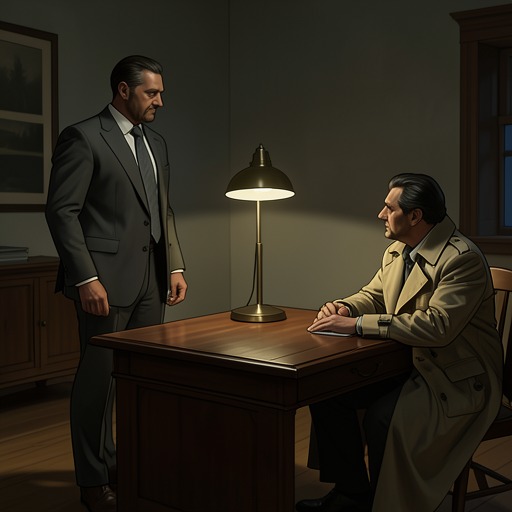
The Red Brigades’ most immediate appearance comes in a Milan street attack. Rika has just left a hairdresser when she sees two men leap from a Volkswagen van and run toward a man unlocking a white Fiat. As gunfire begins, Creasy pulls her into a shop doorway and shields her from the shooting. When the attack ends, the victim lies across the Fiat’s bonnet, dead.
The narration identifies the incident as a Red Brigade killing and the victim as a prosecuting attorney, while noting that such an event was not unusual in Milan. Creasy gives the police his bodyguard’s license and a limited account of what he saw. His description of the gunmen is too general to distinguish them in a city of many thousands of young men; the van’s registration number is more useful, although he knows the vehicle is stolen. The scene makes political violence a witnessed part of Rika’s life, not merely a distant explanation for rising security costs.
The kidnapping plot and the limits of attribution
The novel distinguishes the Red Brigades from the people responsible for Pinta Balletto’s abduction. During the kidnapping, police conduct a major sweep for a Red Brigade gang. The account suggests that Pinta’s kidnappers became nervous and hid for several hours; she was later found dead in the trunk of a stolen car, having choked after vomiting while restrained and exposed to petrol fumes. The sweep therefore forms part of the circumstances surrounding her death, but the text does not identify the Red Brigades as her kidnappers.
The later revelation assigns the kidnapping to a separate criminal scheme. Ettore Balletto had arranged a two-billion-lire policy with Lloyd’s of London, with Fossella to return half the ransom to him and Vico Mansutti acting as intermediary for a commission. The disclosure reframes the family’s supposed protection as part of an insurance fraud involving organized crime. Against that plot, the Red Brigades remain a distinct threat: their public political violence helps sustain the climate of fear, but it is not the explanation for Pinta’s abduction.